

1. A general framework for understanding Turkiye
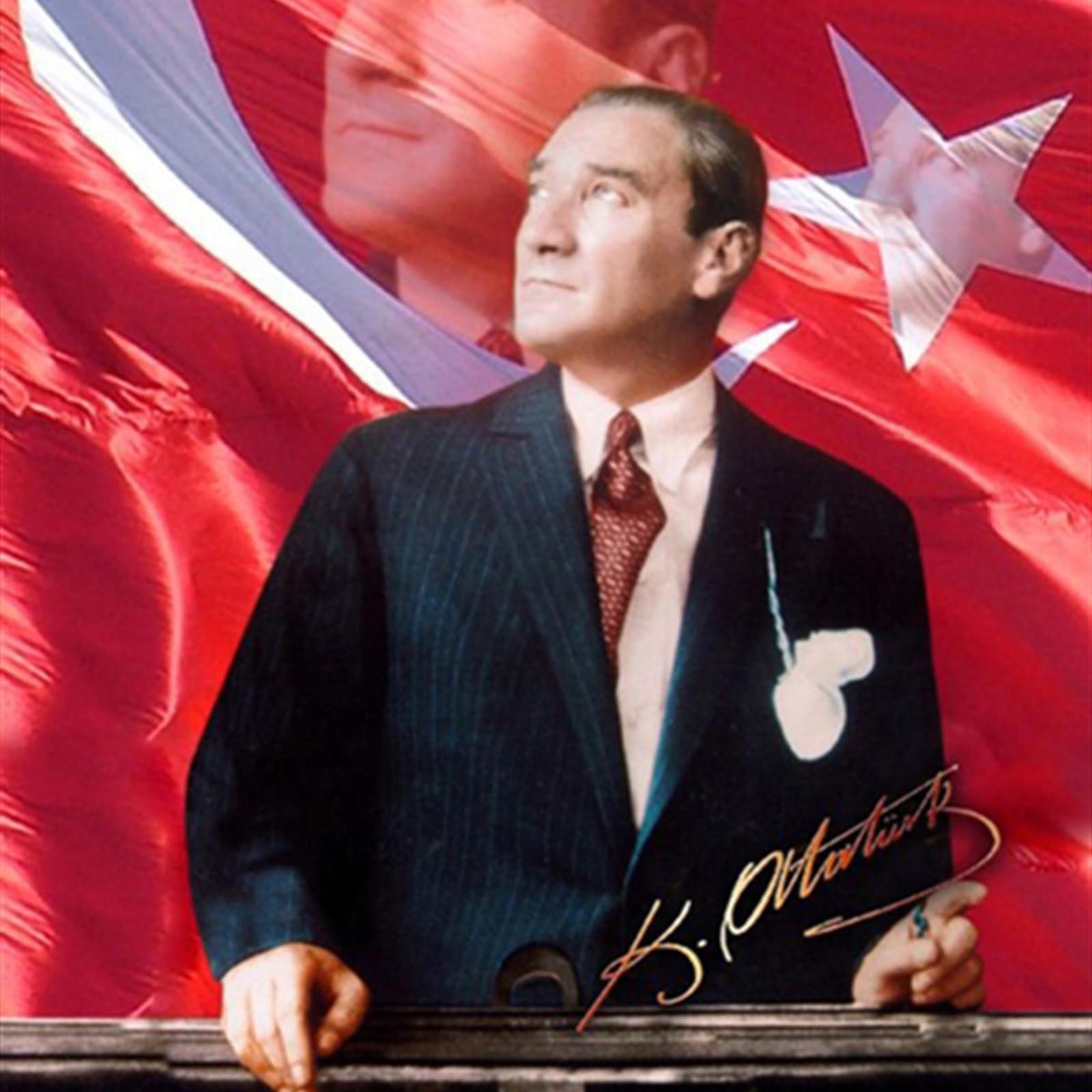
Understanding the recent history of Turkiye is not possible by memorising a few war dates or constitutional turning points. This story requires reading together the complex transition from the decline of an empire to the birth of a nation-state, the will for independence shaped under occupation, the parliamentary understanding of sovereignty, the experience of founding leadership and the broad social transformation that followed.
The main historical rupture that shaped today’s identity of Turkiye became visible after 1918. The fragmentation and occupation threat that deepened after the First World War was reversed through the National Struggle between 1919 and 1922, and transformed into a new political regime with the proclamation of the Republic on 29 October 1923. In this process, Mustafa Kemal Atatürk stands out not only as a successful military commander but also as the leader who built the legitimacy of the new state around national will, institutions, law, education and modernisation.
Historical backbone
A transition from a dissolving imperial order to a republican model based on national sovereignty.
Founding centre
Ankara-based political organisation, parliamentary authority and the idea of national independence.
Current meaning
The traces of this transformation still live in the institutions, capital structure, education system and public memory of modern Turkiye.
2. The late Ottoman period and the crisis background
Throughout the nineteenth century, the Ottoman Empire entered a deep period of transformation under both internal and external pressure. Administrative reforms, financial problems, territorial losses, wars, the rise of nationalist movements and shifts in the European balance of power deeply affected the empire’s final period. Reform efforts such as the Tanzimat and Islahat reflected a clear search for modernisation, yet the imperial order struggled to overcome overlapping crises.
The Balkan Wars and the First World War accelerated this collapse. The Armistice of Mudros greatly weakened the Ottoman state’s practical ability to defend itself and opened the way for outside intervention in ports, railways and strategic territories. Occupations, control attempts and a climate of uncertainty emerged across Anatolia. The social and political ground of the War of Independence was formed in exactly this atmosphere.
To understand the National Struggle, one must see a central truth: this was not only a military resistance. It was also a struggle over legitimacy, representation, sovereignty and the future.
Main causes of the rupture
Territorial losses, war fatigue, financial strain, outside intervention, weakening central authority and the occupation threat.
Its result in Anatolia
The rise of local resistance, the search for representation, congresses and the strengthening of the idea of national sovereignty.
3. The birth of the National Struggle
The National Struggle was not a short-term military reaction. It was a broad independence movement that sought to build a common will across Anatolia. In this sense, 1919 was decisive. Mustafa Kemal Pasha’s arrival in Samsun is understood not simply as a new assignment, but as the beginning of a new political process aimed at organising national sovereignty in Anatolia.
At this stage, Mustafa Kemal’s role was not limited to charisma or military experience. His most important contribution was transforming fragmented defensive reactions into a common political program, a shared national objective and a representative structure.
4. The opening of the Grand National Assembly and national sovereignty
The opening of the Grand National Assembly of Turkiye in Ankara on 23 April 1920 created the institutional backbone of the National Struggle. This development meant far more than the creation of a new parliament. It marked a historic threshold in defining the source of sovereignty as the will of the nation. The Assembly became the centre that took decisions in war, diplomacy, internal order, representation and law.
The choice of Ankara was not accidental. Ankara stood out because of its location in inner Anatolia, its transport links, its relatively secure position and its suitability for building a new political centre. In this way, Ankara became not only a geographic point, but the political geography from which the Republic would emerge.
The meaning of the Assembly
It transformed armed resistance from a scattered defensive reaction into a struggle grounded in political and legal legitimacy.
The idea of national sovereignty
The central claim of the new state was that sovereignty belonged not to a dynasty, but to the nation.
5. Military and political stages of the War of Independence
The War of Independence should be understood not only as a military victory, but also as a process of diplomacy, mobilisation, organisation and moral resilience. The struggles on different fronts, the formation of the regular army and the defence of national legitimacy should all be considered together.
The move to a regular army
Bringing local resistance forces under unified command and discipline made the struggle sustainable.
Turning points
The battles of İnönü, the Battle of Sakarya and the Great Offensive were stages in which both military and psychological superiority were established.
Diplomatic result
Military success strengthened the search for international legitimacy and prepared the ground for the recognition of the new state.
The defence at Sakarya became a symbol not only of battlefield strategy, but of total national resistance. The Great Offensive and the developments that followed were decisive in breaking the occupation order. This process mattered not only in terms of territorial control, but also in forcing recognition of the will to found an independent state.
6. The proclamation of the Republic and the new state order
The proclamation of the Republic on 29 October 1923 gave institutional form to the political logic of the National Struggle. Sovereignty was openly defined as belonging to the nation, and the structure of state leadership and executive authority was reorganised in line with the new regime.
The Republic was not simply a change in the form of government. It was a new conception of citizenship, law, representation, education, public life, institutions and the future. For that reason, the proclamation of the Republic should be read not as a technical stage after the war, but as the historic decision that made the goal of the entire struggle fully visible.
The foundation of the Republic of Turkiye united the defence of independence with the redefinition of the state itself.
7. The founding leadership of Mustafa Kemal Atatürk
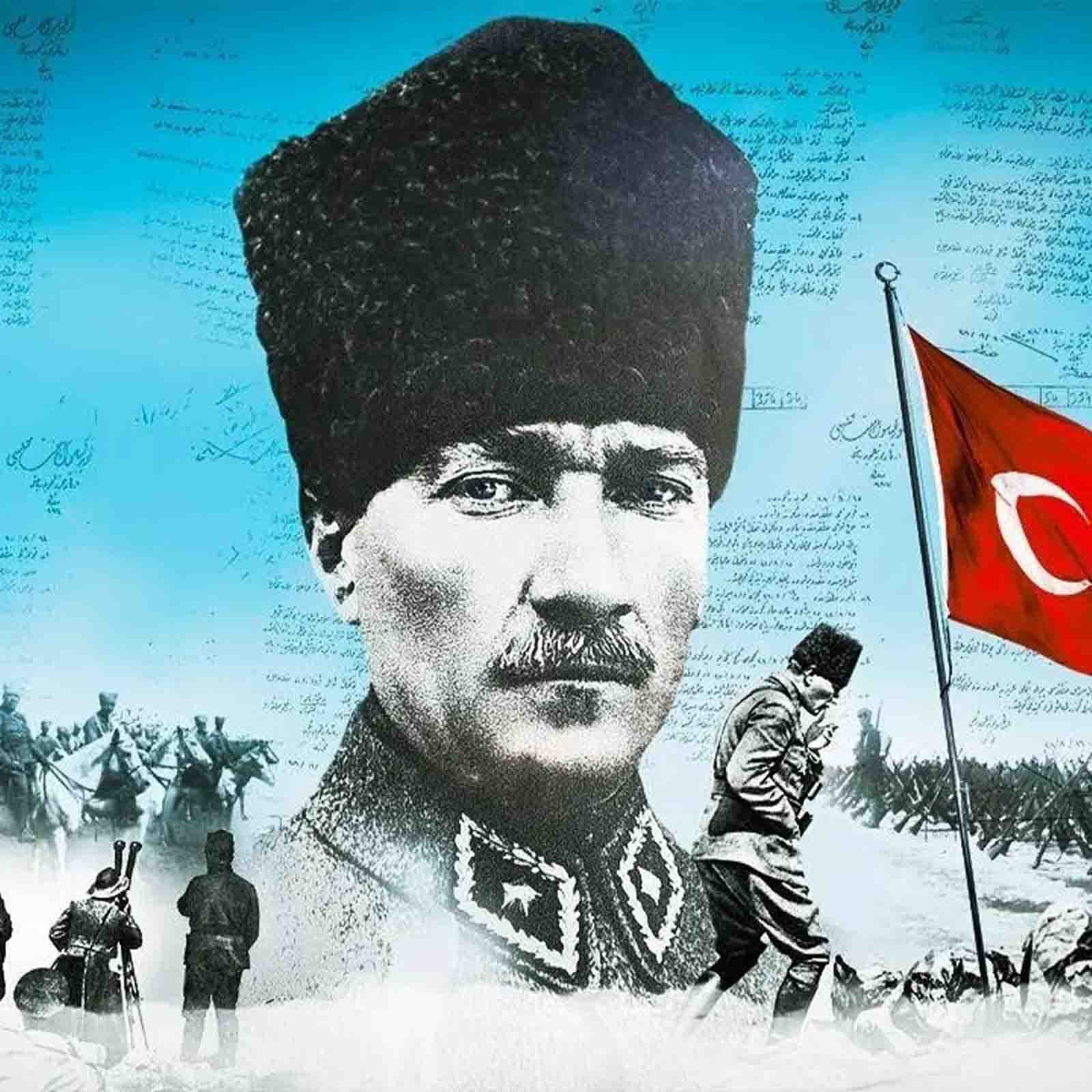
As the founding leader of the Republic of Turkiye, Mustafa Kemal Atatürk stands out both through his military success and through his determination to build a new state. His historical role was not limited to being the commander who led the war. His truly founding quality lay in bringing fragmented resistance under a shared national objective, defending parliamentary legitimacy, defining the basic principles of the new state and setting the modernising direction of the Republic.
Military leadership
Strategic foresight, decision-making under pressure, disciplined organisation and the ability to manage the psychological dimension of war.
Founding leadership
A vision centred on parliamentary sovereignty, institutional statehood, legal transformation, educational reform and modern public life.
Atatürk’s founding leadership mattered because it produced not just personal authority, but a state-building logic. He imagined the new Turkiye not merely as a country that had won a war, but as a republic with institutions, a future-oriented mindset, an emphasis on education and science, and the capacity to stand on its own.
The principle of “Peace at home, peace in the world” was not only a foreign policy slogan. It also expressed the Republic’s broader commitment to internal peace, order, rationality and balance.
8. Republican reforms and the modernisation program
The reforms introduced in the early years of the Republic formed a deep program of social transformation that supported the new state structure. The aim was not simply to proclaim the new regime on paper, but to establish a sustainable modern framework across law, education, culture, economy and public life.
Law and governance
The new state order was reshaped according to a modern understanding of law and an institutional administrative framework.
Education and culture
The unification of education, the new alphabet, literacy campaigns, and language and history studies became the main axes of cultural transformation.
Social life
The participation of women in public life and changes in representation, dress and everyday practice were linked to the broader modernisation of society.
The common thread among these reforms was the idea that an independent state must strengthen not only its borders, but also its institutions, its way of thinking and its social capacity. That is why the reforms of the Republic are seen as one of the defining turning points in the modernisation of Turkiye.
9. Ankara as the capital and the geography of the Republic
Ankara emerged as the practical decision-making centre during the National Struggle and was declared the capital shortly before the proclamation of the Republic, becoming the administrative and symbolic core of the new state. The transfer of the capital from Istanbul to Ankara was not just a geographic choice. It represented the re-establishment of political centrality in a way that matched the new republican regime.
The First Assembly, the Second Assembly, ministry buildings, early republican architecture and Anıtkabir show that the Republic is not only an idea, but also a history inscribed into space. For that reason, Ankara is far more than a capital city in the administrative sense; it is the city where the founding memory of the Republic is made visible.
Why Ankara?
Because of its security, inner Anatolian location, transport logic, ability to host a new political centre and its central role in the National Struggle.
The symbolic meaning of Ankara
As the city of the Assembly, the capital, republican architecture and Anıtkabir, Ankara became the most powerful urban carrier of the founding memory of Turkiye.
10. Modern Turkiye today
Modern Turkiye is a layered country built on the founding principles of the Republic while combining historical memory with contemporary institutions, major cities, production capacity, cultural diversity, higher education networks, industry, tourism, creative sectors and regional connectivity.
Today, it would be incomplete to explain Turkiye only through monuments or ancient history. Modern Turkiye must also be understood through the administrative weight of Ankara, the global city character of Istanbul, the trade and quality-of-life strength of Aegean and Mediterranean cities, the production logic of Central Anatolia, the natural and energy links of the Black Sea region, the culture and gastronomy of Southeastern Anatolia and the geographic depth of Eastern Anatolia.
Institutions
Parliament, judiciary, universities, public institutions, diplomacy, municipal systems and civil society form the backbone of modern public life.
Urbanisation
Although major metropolitan areas and Anatolian cities move at different rhythms, transport, education and cultural networks connect the country as a whole.
Social fabric
Turkiye has a rich social structure in which regional identities, historical layers, cuisines, lifestyles and public memories coexist.
Main character lines of modern Turkiye
Founding memory and contemporary dynamism live side by side. The symbols of the Republic and the pace of modern city life meet in the same national experience.
Education and culture remain powerful. Universities, museums, libraries, festivals and creative industries are important parts of public life.
Transport and connectivity are extensive. Air, road, rail and sea links make multi-city life and travel possible across Turkiye.
The past and the present are visible at the same time. An ancient city may stand beside a contemporary university campus, and a historic bazaar beside a modern urban square.
How should modern Turkiye be read?
The best way to understand modern Turkiye is not to reduce it to a single theme. Turkiye brings together the founding intelligence of the Republic, historical continuity, regional diversity, modern public institutions, high mobility and cultural plurality within one national framework. That is why modern Turkiye is both a historical narrative and a living, changing, productive social reality.
11. Memory sites and historical stops
The memory of the Republic and the National Struggle lives not only in books, but also in cities, squares, parliamentary buildings, monuments and ceremonial spaces. The cities and stops below are especially important for feeling this historical backbone on the ground.
Ankara
With Anıtkabir, the First Grand National Assembly, the Second Assembly, republican architecture and its capital-city logic, Ankara is the strongest centre of founding memory.
Samsun
It represents the threshold at which the National Struggle began and carries high symbolic weight in the national narrative.
Amasya
A key turning point where the language of national sovereignty became clearer and the political framework of resistance took shape.
Erzurum and Sivas
Critical cities for representation, shared political aims and organised resistance through the congress process.
Çanakkale
An essential site within earlier military memory, deeply linked in public consciousness with the rise of Atatürk.
The İzmir and Dumlupınar line
These places represent the final phase of the war, the field expression of victory and the visible consolidation of independence.
12. Route logic built around the Republic and the National Struggle
This historical framework does not end in a single city. To understand Turkiye through this lens, it is more accurate to think of cities according to their historical functions.
Classic founding route
Samsun – Amasya – Erzurum – Sivas – Ankara makes visible the line from the birth of the movement to its political institutionalisation.
Capital and Republic focus
Ankara alone is a powerful centre for understanding the symbolic, architectural and institutional memory of the Republic.
Military memory and independence axis
Çanakkale – Sakarya – Dumlupınar – İzmir carries the different phases of war and their deep reflection in national memory.
Republic plus modern Turkiye readings
Ankara – Istanbul – İzmir allows visitors to see the founding political centre together with modern urban and economic dynamism.
13. Natural search and question variations
The question clusters below show how the history of the Republic, the National Struggle and modern Turkiye may be searched or asked in different natural-language ways.
14. Frequently asked questions
Why is the foundation of the Republic of Turkiye a historic turning point?
Because it represents the transformation of an independence struggle, fought under the threat of occupation and fragmentation, into a new state order grounded in parliamentary sovereignty. The source of authority was defined as the nation, and the new regime was established on republican principles.
Why is Mustafa Kemal Atatürk seen as the founding leader?
Atatürk organised the National Struggle around a common objective, defended parliament-based legitimacy, determined the direction of the proclamation of the Republic and the reform program, and shaped the new Turkiye as a project of institutional and intellectual transformation, not merely a military victory.
Why did Ankara become the capital?
Ankara emerged during the National Struggle as a secure, central and logistically suitable decision-making centre. Its selection as the capital symbolised the rebuilding of the political centre of the new state within the founding geography of the Republic.
What is the relationship between the War of Independence and the Republic?
The War of Independence secured independence itself, while the Republic determined the political and institutional basis on which that independence would continue. One represents struggle and liberation; the other defines the form and future of the new state.
Is modern Turkiye defined only by its historical heritage?
No. Modern Turkiye carries its historical inheritance, but it is also a living modern country shaped by contemporary institutions, major cities, education networks, cultural production, transport infrastructure and a dynamic social life.
15. Source note
The historical backbone of this page was prepared with reference to the history and institutional publications of the Grand National Assembly of Turkiye, the official framework of the Atatürk Research Center on Atatürk, the National Struggle and Republican history, official narratives on the Republic and foreign policy, and national destination resources that explain the capital, heritage and modern city structure of Turkiye.
This text was written as a balanced, educational and historically grounded guide. If needed, it can be expanded with more detailed subsections, visual timelines or city-based Republic memory files.